 Crucis
Bible at a Glance · New Testament
3 John
Catholic Letters · 1 chapter · 3 min read
Scripture quotations from the Douay-Rheims Bible (Challoner revision)
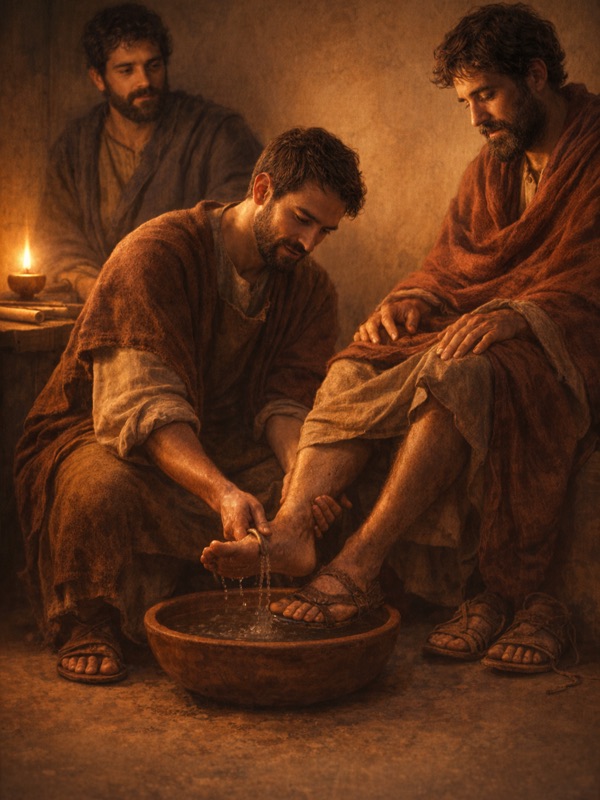
Gaius opens his door. Diotrephes keeps his shut. The whole letter turns on hospitality.
It is a small window into the early Church, where welcoming those who carried the Gospel made you a partner in their work.
The Book of 3 John is a short personal letter and tells the story of how an elder of the Church praised a faithful friend named Gaius and warned against a proud man who refused to welcome the brethren.
The writer called himself the elder. He wrote to Gaius, whom he loved in truth, and he prayed that Gaius might be well in body as he was already well in soul.
Some traveling brethren had come to the elder and told him how Gaius walked in the truth. This news filled him with joy. He said: I have no greater grace than this, to hear that my children walk in truth.
3 John 1:4
The elder praised Gaius for caring for the brethren, even strangers, who went out for the name of Jesus and took nothing from the pagans. He asked that they be helped on their way.
Next the letter turned to a man named Diotrephes. He loved to be first among them, and he would not receive the elder or his messengers. He spoke evil words against them and drove out of the Church those who wished to welcome the brethren.
The elder said that if he came, he would call to mind what Diotrephes had done. He then urged Gaius: Dearly beloved, follow not that which is evil, but that which is good.
3 John 1:11 He added that he who does good is of God, and he who does evil has not seen God.
The letter also praised Demetrius, who had a good witness from all. The elder hoped to see Gaius soon and closed with peace.
The central message of 3 John is that the truth of Christ is kept alive by love shown in deeds, not by pride. Those who welcome the messengers of the Gospel share in their work, and the Church is shown as a family bound to Jesus, who is the Truth.
Takeaway
A hope to meet soon, a simple wish of peace, and the letter is done.
Behind it stands a sharp contrast: one man who loved to be first, another who simply walked in the truth. Pride shuts doors. Love opens them.
Most of us carry a little Diotrephes inside, wanting the first place.
Open your door this week: greet a newcomer after Mass, visit a lonely neighbor, or invite a priest to your table.