 Crucis
Blog · July 27, 2026
Biblical Proof of Purgatory
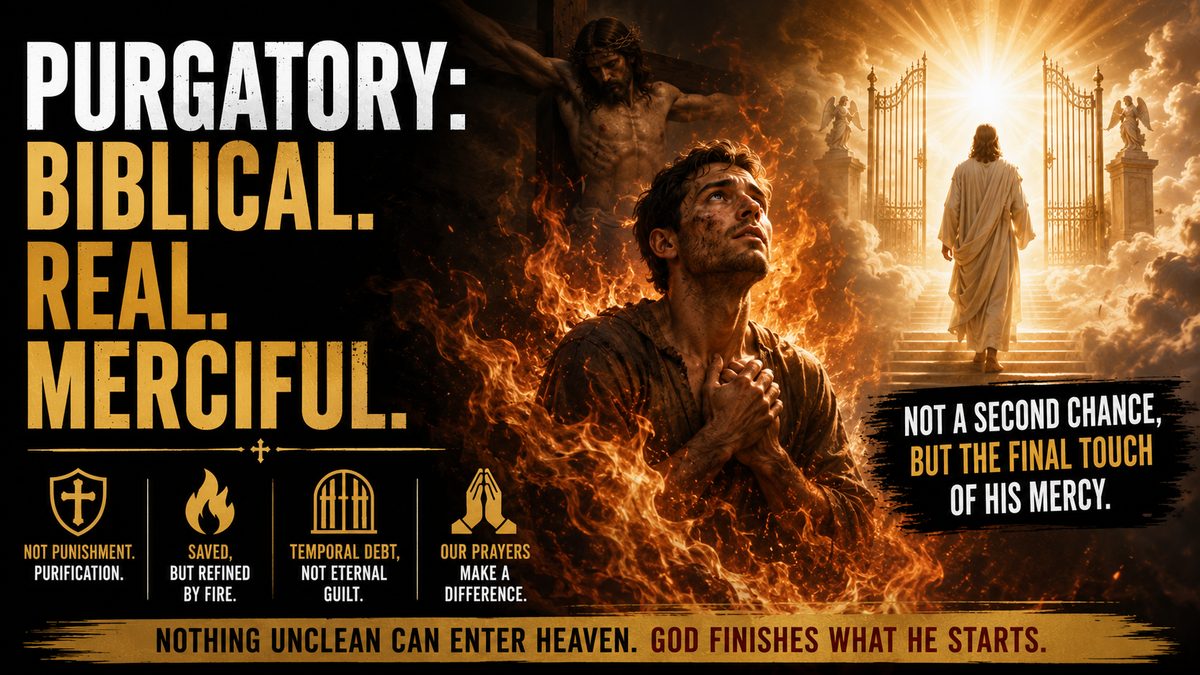
One of the most persistent misunderstandings among our non-Catholic brothers and sisters is the belief that Purgatory is an extra-biblical invention—a medieval myth created to exploit believers or undermine the finished work of Jesus Christ on the Cross.
The common objection is well known: "The word 'Purgatory' isn't anywhere in the Bible!"
Yet neither are the words Trinity, Incarnation, or Personal Lord and Savior. Christians rightly defend those concepts because the essential truth behind them is woven directly into the fabric of Sacred Scripture. Purgatory is no different. It is not a "second chance" after death, nor is it a place of punishment for the damned. It is the final, merciful purification of those who die in God's grace—a divine cleansing before stepping into the blazing beauty of His holiness.
The Divine Standard: Absolute Perfection
To understand why Purgatory must exist, we must look at what the Scriptures demand for those entering the immediate presence of the Almighty:
"You therefore must be perfect, as your heavenly Father is perfect." — Matthew 5:48
"But nothing unclean shall enter it..." — Revelation 21:27
Heaven is not merely a place where forgiven sinners gather; it is the realm of unblemished perfection. Honest self-reflection reveals that many who die in God’s friendship still carry attachments to venial sins, unhealed spiritual wounds, and the temporal consequences of past transgressions.
If nothing unclean can enter Heaven, and yet we are saved by grace, how does an imperfect believer become fit for the vision of God? The answer is final purification—what the ancient tradition of the Church terms Purgatory.
Saved, Yet Tested By Fire
St. Paul provides one of the most explicit depictions of post-mortem purification in his First Letter to the Corinthians:
"Each man's work will become manifest; for the Day will disclose it, because it will be revealed with fire, and the fire will test what sort of work each man has done... If any man's work is burned up, he will suffer loss, though he himself will be saved, but only as through fire." — 1 Corinthians 3:13–15
Continue reading in the app — free.