 Crucis
Bible at a Glance · New Testament
2 Corinthians
Letters of Saint Paul · 13 chapters · 4 min read
Scripture quotations from the Douay-Rheims Bible (Challoner revision)
Beaten. Shipwrecked. Doubted by his own converts. Paul has never looked weaker, and God has never looked stronger.
In this letter an apostle opens his heart and his scars, and shows how God's treasure travels in clay jars like us.
The Second Letter to the Corinthians is a letter written by Saint Paul to the Church in Corinth, and it tells how an apostle, wounded by suffering and by the doubts of his own people, still serves Christ with trust in God's power.
Comfort in Suffering
Paul wrote this letter to the Christians he had gathered in the Greek city of Corinth. Relations had become painful. Some there doubted him, and he had already written them a sorrowful letter.
He begins by blessing God, the Father of mercies, who comforts us in every trouble. Paul tells of the hardships he suffered in Asia, so great that he thought he would die. He says God allowed it so that he would trust not in himself but in God who raises the dead.
He explains that he delayed his visit to Corinth to spare them pain. When someone among them had sinned and been corrected, Paul asks the community to forgive him and welcome him back. Later Titus brought him good news from Corinth, and Paul rejoiced that their sorrow had led them to repentance.
The Ministry of Reconciliation
Paul then describes the work of an apostle. The Gospel is a treasure carried in clay jars, so that the power is seen to belong to God and not to men. Though afflicted, perplexed and persecuted, the apostles are not abandoned.
At the heart of his message is what Christ has done. Paul teaches that in Christ a new life begins: If then any be in Christ a new creature, the old things are passed away, behold all things are made new.
2 Corinthians 5:17 God was in Christ reconciling the world to Himself, and He has given the apostles the ministry of reconciliation.
The Collection for Jerusalem
Paul next turns to a gift of money he is gathering for the poor Christians of Jerusalem. He praises the churches of Macedonia, who gave generously out of deep poverty. He points to Christ, who being rich became poor for our sake.
He asks the Corinthians to finish what they began a year earlier. Each one should give as he has decided in his heart, for God loveth a cheerful giver.
2 Corinthians 9:7
Paul Defends His Apostleship
In the last chapters the tone grows sharper. Some newcomers, whom Paul calls false apostles, had mocked him as weak and boasted of their own gifts. Paul answers reluctantly, saying he boasts only as a fool.
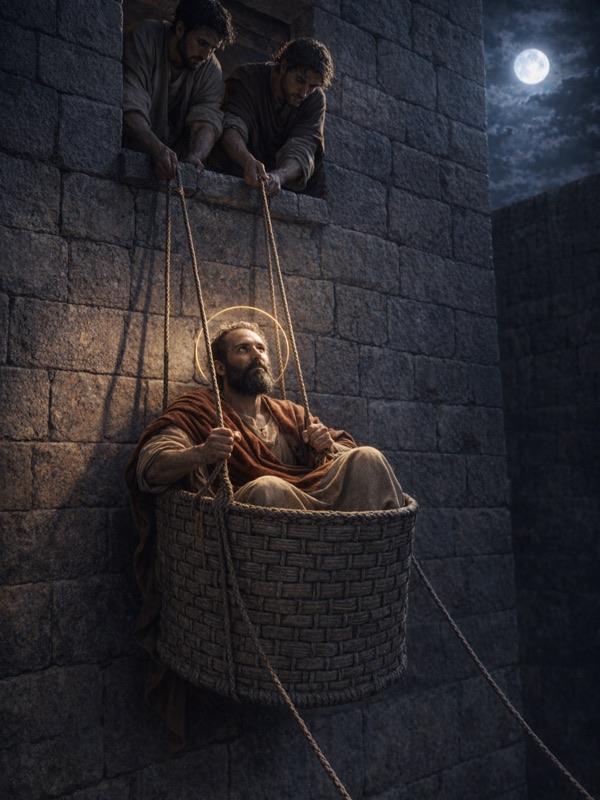
He lists his labors: far more imprisonments, countless beatings, shipwrecks, dangers on the roads, hunger and constant care for all the churches. He also speaks of being caught up into paradise, and of a thorn in the flesh given to him.
Three times he begged the Lord to take it away. The Lord answered: My grace is sufficient for thee; for power is made perfect in infirmity.
2 Corinthians 12:9 So Paul gladly boasts in his weakness, that the power of Christ may dwell in him.
He ends by announcing his third visit and asking them to examine themselves, to see whether they are in the faith. He closes with a blessing: the grace of our Lord Jesus Christ, the love of God and the fellowship of the Holy Spirit be with them all.
The central message of 2 Corinthians is that God shows His strength through human weakness, and that He has reconciled the world to Himself in Jesus Christ. Christ crucified and risen is the source of new life, and the Church, through her ministers, carries on His work of reconciliation.
Takeaway
Three times Paul begged the Lord to take the thorn away. The answer was no: grace would be enough.
You may carry a prayer like that, asked again and again, met each time with the same quiet answer. It does not mean God has stopped listening.
His strength often settles exactly where yours runs out.
Tonight, name your weakness to Him, and ask not for escape but for grace to carry it.