 Crucis
Bible at a Glance · Old Testament
Nahum
The Prophets · 3 chapters · 3 min read
Scripture quotations from the Douay-Rheims Bible (Challoner revision)
Nineveh once repented at Jonah's preaching. It did not stay repentant.
Nahum announces the fall of the cruel city as comfort for a crushed people, and his messenger of peace on the mountains points ahead to the Gospel of Christ.
The Book of Nahum is a short prophecy and tells how God judged Nineveh, the proud capital of Assyria, and so brought comfort to His people who had suffered under its cruelty.
The Lord Who Judges
Nahum opens by describing who God is. He is patient, yet He does not leave evil unpunished. The prophet says that the Lord is good, and giveth strength in the day of trouble, and knoweth them that hope in him
Nahum 1:7.
To Judah, long burdened by Assyria, He promises that the yoke will be broken and that a messenger of peace will come over the mountains.
The Fall of Nineveh
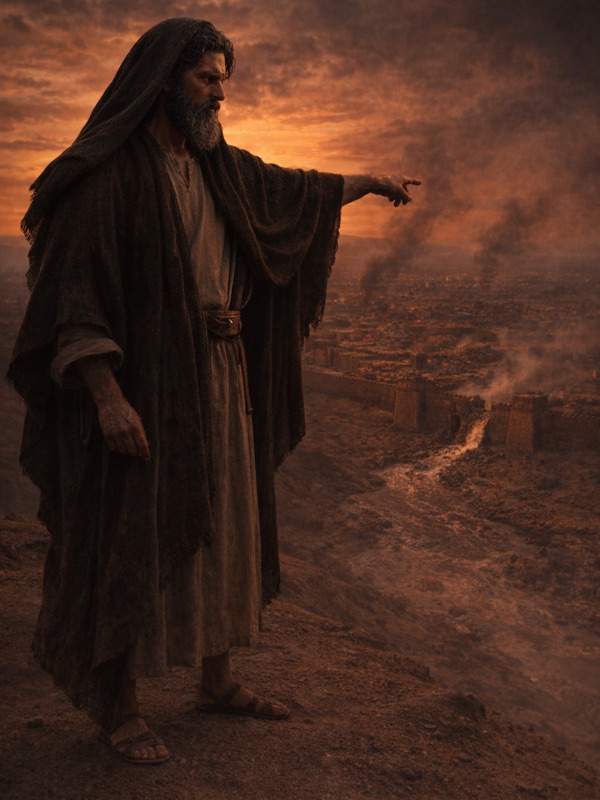
Nahum then sees the attack on the city. He describes chariots clashing, swords flashing and invaders rushing through the streets.
Nineveh had once repented at the preaching of Jonah. By the time of Nahum, in the seventh century before Christ, it had returned to violence and had crushed many nations, among them the northern kingdom of Israel.
Woe to the Bloody City
In the last chapter the prophet gives the reasons for its fall. The city is full of lies and murder, and the nations will see its shame.
Nahum reminds Nineveh that mighty Thebes in Egypt had also fallen, though it seemed secure. Nineveh's guards and princes will scatter like locusts, and no one will heal its wound.
Around six hundred and twelve years before Christ, Nineveh was destroyed by Babylon and the Medes, as the prophet had foretold.
The central message of Nahum is that God is just and rules over every nation, and no empire built on cruelty can last forever. His judgment on evil is a mercy to the oppressed, and the messenger of peace on the mountains points ahead to the Gospel, in which Jesus Christ conquers sin and death and brings lasting peace to those who take refuge in Him.
Takeaway
Nahum ends with Nineveh's wound beyond healing and its guards scattering like locusts.
When cruelty seems to win, in the news or close to home, it is tempting to think God does not see.
Nahum says He does. The Lord is patient, but He does not leave evil unpunished, and He knows those who hope in Him.
Entrust to God one injustice you cannot fix, then do one kind thing today for someone who is being treated unfairly.