 Crucis
Bible at a Glance · Old Testament
Micah
The Prophets · 7 chapters · 3 min read
Scripture quotations from the Douay-Rheims Bible (Challoner revision)
Little among the clans of Judah. Yet from Bethlehem would come a ruler whose origins reach back to eternity.
Micah confronts greed and false comfort, and names the birthplace of the Shepherd who would Himself be peace: Jesus Christ.
The Book of Micah is a book of prophecy and tells how God, through Micah, judged the sins of His people, promised a King from Bethlehem, and offered mercy to those who return to Him.
Judgment on Samaria and Judah
Micah came from the village of Moresheth in Judah and spoke in the days of Jotham, Ahaz and Hezekiah, kings of Judah, in the eighth century before Christ. He was sent to Samaria and Jerusalem, the capitals of the two kingdoms.
The people had turned to idols, and Samaria was to fall. Around seven hundred and twenty-two years before Christ, Assyria destroyed it.
In Judah, rich men seized the fields and houses of the poor, and false prophets told the people only what pleased them. Micah warned that Jerusalem would become a heap of ruins.
Hope for the Remnant
Yet Micah does not end with ruin. He sees the mountain of the Lord's house raised above the hills, and many nations coming to learn His ways. They will beat their swords into ploughshares, and peace will come.
He foretells exile in Babylon, and also that the Lord will redeem His people from there.
The Ruler from Bethlehem
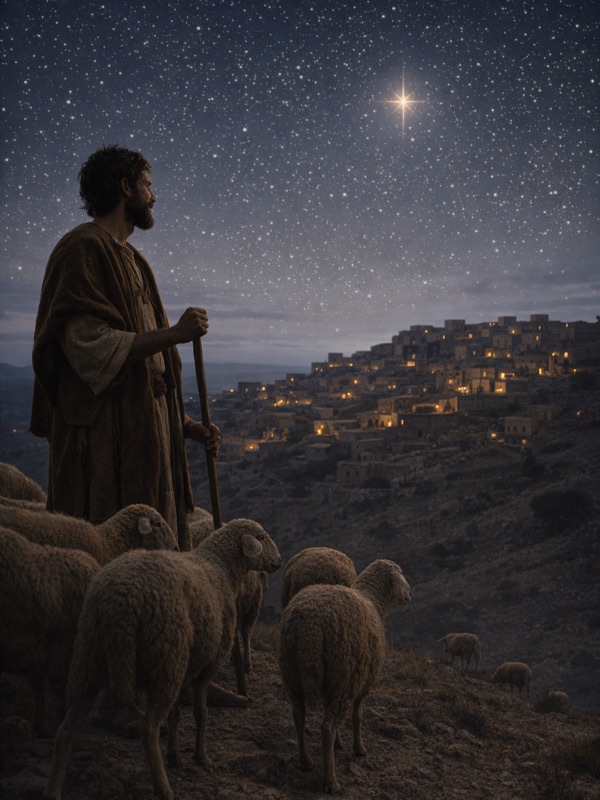
Micah names the place where the promised King will be born. And thou, Bethlehem Ephrata, art a little one among the thousands of Juda: out of thee shall He come forth unto me that is to be the ruler in Israel: and His going forth is from the beginning, from the days of eternity.
Micah 5:2
This Shepherd will feed His flock in the strength of the Lord, and He will be peace.
The Lord's Complaint
The Lord pleads His case before the mountains. He reminds Israel of the Exodus from Egypt.
No sacrifice can please Him without a just heart. I will shew thee, O man, what is good, and what the Lord requireth of thee: Verily to do judgment, and to love mercy, and to walk solicitous with thy God.
Micah 6:8
Mercy at the End
Micah ends in sorrow, for the faithful seem to have vanished. Still he says he will look to the Lord and wait for God, his Saviour.
The book closes in praise of God, who pardons sin, casts it into the depths of the sea, and keeps the promise He swore to Abraham and Jacob.
The central message of Micah is that God judges injustice yet never abandons His people. He kept His promise in Jesus Christ, born in Bethlehem, the Shepherd who brings peace, forgives sin, and gathers all nations into His Church.
Takeaway
Micah ends by praising a God who throws our sins into the depths of the sea.
Perhaps you keep fishing them out again: old failures already confessed, still heavy on your heart.
God does not. He pardons sin and keeps His promises, and what He has forgiven, He has cast away.
Live Micah's short rule in one concrete choice today: do justice, love mercy, and walk humbly with your God.