 Crucis
Blog · July 17, 2026
Debunking the Myth of "Faith Alone"
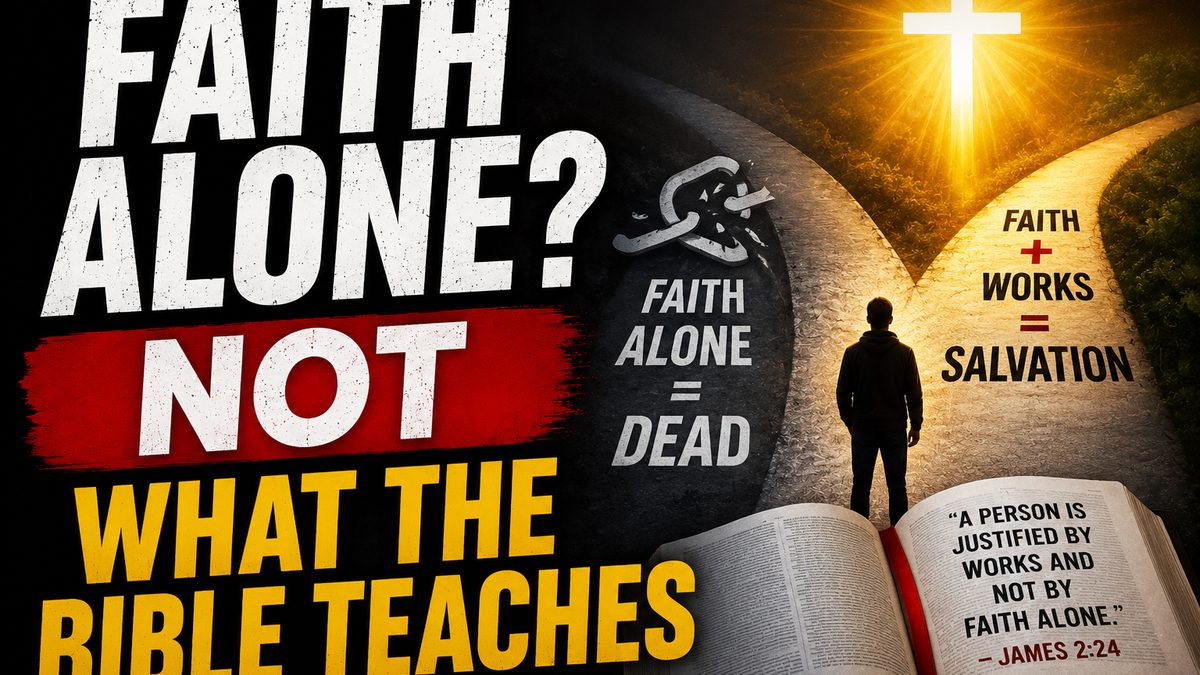
Not by Faith Alone: Understanding the Biblical View of Salvation
There is a common accusation leveled against the Catholic Church by our Protestant brothers and sisters: that Catholics believe in a "works-righteousness" system. They claim we believe we can buy, earn, or work our way into heaven through sheer human effort.
This is a complete misunderstanding of Catholic doctrine. In fact, the Catholic Church has explicitly and repeatedly condemned the idea that a human being can earn their own salvation.
In the sixth session of the Council of Trent, the Church stated clearly:
"If anyone saith, that man may be justified before God by his own works, whether done through the teaching of human nature or that of the law, without the grace of God through Jesus Christ; let him be anathema." (Canon 1 on Justification)
We do not believe we can earn salvation. The ancient heresy that we can save ourselves through our own works is called Pelagianism, and the Church condemned it in the fifth century.
So if Catholics do not believe we earn our way to heaven, why do we reject the popular Protestant doctrine of Sola Fide (Salvation by "Faith Alone")?
The answer is simple: Because the Bible explicitly rejects it.
Let’s look at what Sacred Scripture actually says about how faith, grace, and works interact in our salvation.
The Only Place "Faith Alone" Appears in Scripture
Protestants often champion Sola Fide as a foundational pillar of the Christian life. Yet, if you search the entire Bible from Genesis to Revelation, the words "faith" and "alone" (or "only") appear together in the context of salvation in only one single verse. And it explicitly says NOT by faith alone.
That verse is found in the Epistle of St. James:
"You see that a person is justified by works and not by faith alone." — James 2:24
St. James dedicates a large portion of his second chapter to correcting the dangerous idea that mental belief is enough to save a person:
"What good is it, my brothers, if someone says he has faith but does not have works? Can that faith save him? ... So also faith of itself, if it does not have works, is dead." — James 2:14, 17
He even adds a striking comparison to show that mere intellectual assent has no saving power:
"You believe that God is one. You do well. Even the demons believe that—and shudder." — James 2:19
If faith were merely a matter of believing that Jesus is God and Savior, then even the fallen angels would be saved, for they know who He is. True, saving faith cannot be separated from love and obedience.
The Final Judgment is Based on Works
When our Blessed Lord describes the Final Judgment at the end of time, He does not ask humanity for a verbal confession of faith alone. He points directly to how they lived out that faith.
In the famous passage of the sheep and the goats, Jesus divides humanity into two groups:
Continue reading in the app — free.
Does faith alone lead to salvation?
No. While salvation is an entirely unearned gift of God’s grace, the Bible explicitly teaches that we are not saved by faith alone. St. James writes, "You see that a person is justified by works and not by faith alone" (James 2:24).