 Crucis
Bible at a Glance · Old Testament
Lamentations
The Prophets · 5 chapters · 3 min read
Scripture quotations from the Douay-Rheims Bible (Challoner revision)
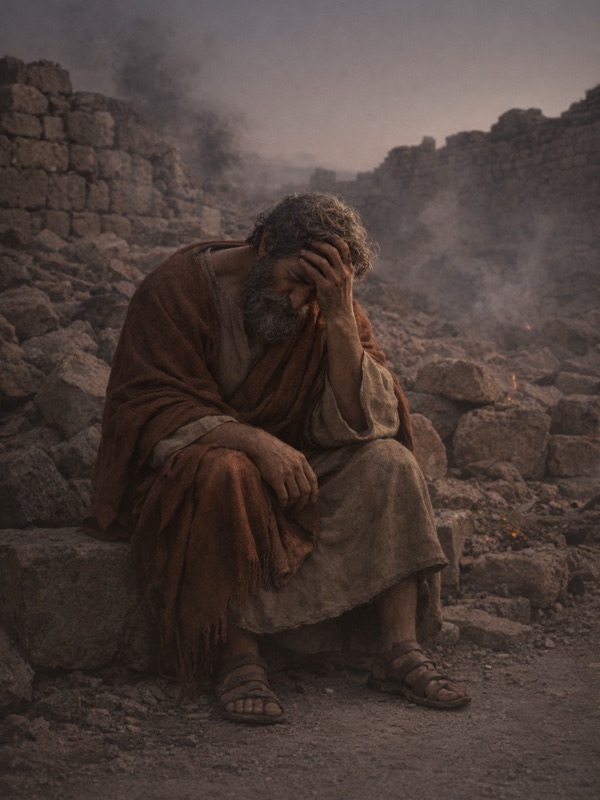
A widowed city weeping in the dark. No one to comfort her. And yet, in the middle of the night, a word of hope.
Lamentations gives words to grief after Jerusalem's fall, and the Church reads these poems in Holy Week, hearing in them the sorrow of Christ.
The Book of Lamentations is a collection of five poems of grief and tells how the people of God mourned after Babylon destroyed Jerusalem and its Temple.
The City in Ruins
Around five hundred eighty-seven years before Christ, the Babylonian army burned Jerusalem after a long siege. The poet looks at the empty streets and weeps.
The first poem shows Jerusalem as a widow, alone and in tears, with no one to comfort her. She confesses that her sufferings came because of her sins.
The second poem describes the Lord's anger. The Temple is broken, the feasts are forgotten, and priests and prophets are silenced. Children faint in the streets, and the poet's eyes fail with weeping.
Hope in the Darkness
The third poem is the heart of the book. A man speaks of his own affliction, as if walking in darkness, yet he turns his mind to God.
In the midst of pain he declares: The mercies of the Lord that we are not consumed: because his commiserations have not failed.
Lamentations 3:22 He teaches that it is good to wait quietly for the Lord's salvation.
Prayer for Restoration
The fourth poem returns to the horror of the siege, the hunger of the people, and the fall of the king and the leaders. It names the sins of priests and prophets, yet it ends with a promise that the punishment will not last forever.
The fifth poem is a prayer of the whole people. They remember their shame, their lost land and their fathers' sins, and they ask the Lord to look upon them. Near the end they cry: Convert us, O Lord, to thee, and we shall be converted: renew our days, as from the beginning.
Lamentations 5:21
The central message of Lamentations is that sin brings real ruin, but God's mercy is never exhausted, and a suffering people may pray to Him with honesty. The Church reads these poems in Holy Week, hearing in them the sorrow of Christ, who bore the suffering of Jerusalem and of all mankind. In Him, crucified and risen, the days of God's people are truly renewed.
Takeaway
Lamentations ends with a plea, not a resolution: turn us back to You, Lord, and renew our days.
Some sorrows do not tidy up. A broken marriage, a child far from the faith, a mistake you cannot undo.
The poet does not pretend otherwise. Yet in the middle of the darkness he says it plainly: the Lord's mercies have not failed.
This evening, pray one Sorrowful Mystery of the Rosary, and place your own grief beside His.