 Crucis
Bible at a Glance · Old Testament
Leviticus
The Pentateuch · 27 chapters · 5 min read
Scripture quotations from the Douay-Rheims Bible (Challoner revision)
Rules for offerings, food and skin disease. Not exactly a page-turner. Yet every line asks one question: how can sinners come near a holy God?
In Leviticus, priests, altars and the Day of Atonement all prepare the answer: the one sacrifice of Christ.
The Book of Leviticus is the third book of the Bible and tells how God taught His people Israel to worship Him and to live as a holy people, after He had freed them from slavery in Egypt.
The Offerings
Leviticus begins at Mount Sinai, where Israel had camped after leaving Egypt. The Lord spoke to Moses from the tent of meeting, the sacred tent where He dwelt among His people.
First, God gave the laws of sacrifice. There were burnt offerings, grain offerings, peace offerings, sin offerings and guilt offerings. Each had its own rules, and each taught that the people depend on God and must turn back to Him when they sin.
The Priests
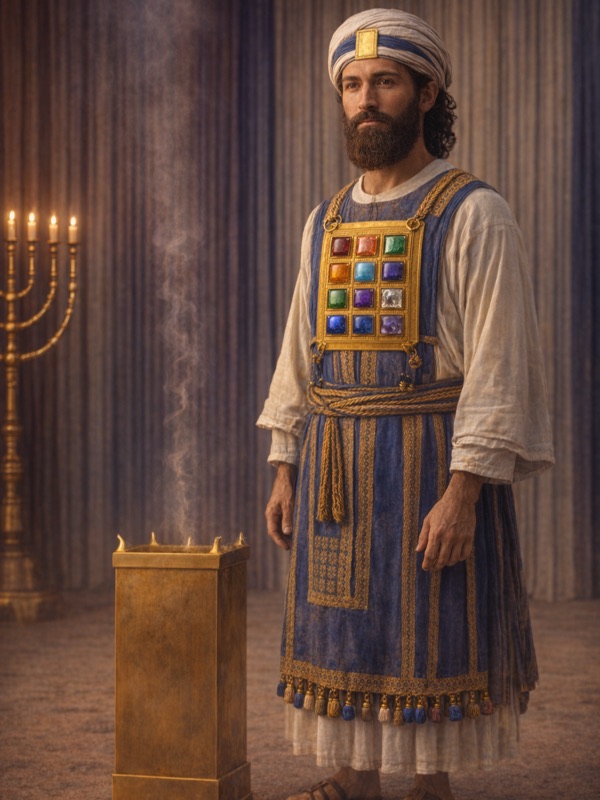
Then Moses consecrated his brother Aaron and Aaron's sons as priests, in a ceremony lasting seven days. On the eighth day they offered their first sacrifices, and the glory of the Lord appeared to all the people.
Fire came out from the Lord and consumed the offering on the altar, and the people fell on their faces. Soon afterward, two of Aaron's sons, Nadab and Abihu, offered strange fire that God had not commanded, and fire struck them dead. This showed that the holiness of God must be approached with reverence.
Clean and Unclean
The book then explains what is clean and unclean. It lists animals that may be eaten and those that may not, and it sets rules for childbirth, skin diseases and bodily discharges. These laws taught Israel to treat life and death with awe and to keep apart from whatever stood against God's holiness.
At the heart of this teaching stands the call of God: I am the Lord your God: be holy, because I am holy.
Leviticus 11:44 Everything else in the book serves this call.
The Day of Atonement
Once each year, on the Day of Atonement, the high priest entered the most holy place of the sanctuary. He offered blood for his own sins and for the sins of the people, and a goat, called the scapegoat, was sent into the desert carrying away the people's guilt.
The book also teaches that blood is sacred, because it stands for life. God gave sacrifice to Israel as the way to be forgiven and made clean.
The Holiness Code
Chapters seventeen to twenty-six set out how a holy people must live. Israel was to honor parents, keep the Sabbath, leave part of the harvest for the poor, use honest scales, and never cheat or oppress a worker or a stranger. Worship of idols and the sins of the nations around them were forbidden.
In the middle of these laws stands a command that Jesus later named as one of the two greatest of all: Thou shalt love thy friend as thyself.
Leviticus 19:18
Feasts and Jubilee
Leviticus sets the sacred calendar: the weekly Sabbath, Passover, the feast of Weeks, the feast of Trumpets, the Day of Atonement and the feast of Tabernacles. Every seventh year the land was to rest.
After seven times seven years, the fiftieth year was the jubilee. Israelites who had sold themselves into service were to go free, and land was to return to its family, so that no one would remain poor forever.
Blessings and Warnings
The law ends with promises. If Israel keeps the covenant, God will bless the land and walk among His people. If Israel turns away, exile and hardship will follow, yet God will remember His covenant and not forsake them completely. A final chapter explains vows and offerings given to the Lord, including the tithe.
The central message of Leviticus is that God is holy and calls His people to be holy, and that He Himself provides the way to draw near to Him. The sacrifices and the priesthood could not by themselves take away sin, but they prepared Israel to understand what Christ would do. Jesus Christ is the true High Priest, and by the offering of His own blood on the Cross He won forgiveness once for all, and in the Mass the Church shares in that one sacrifice.
Takeaway
The law's last word is a promise. Even if Israel strays into exile, God will remember His covenant and not abandon them.
Holiness can sound like something for saints in stained glass. Leviticus brings it down to earth: honest scales, a worker treated fairly, part of the harvest left for the poor.
The Holy One wants to live close to you, and He Himself made the way.
At your next Mass, offer yourself with Christ's one sacrifice. Then do one honest, generous thing before the day ends.